When is storm season in Mayes County?
Spring is the busy stretch. NOAA’s National Severe Storms Laboratory puts the peak tornado season for the southern Plains, Oklahoma included, from May into early June, and says most tornadoes arrive between 4 and 9 p.m. (NOAA severe weather basics). That is the hour when you may be coming home from a shift or pulling the boat out of the lake. The National Weather Service adds that a tornado can form at any time of day or night and at any time of the year (National Weather Service tornado page).
We treat storm season as a habit that runs all year. Spring carries the most tornado risk, and the rest of the year can still surprise you. A plan made in your first week beats one made when the sky turns dark.
A camper changes the math. Oklahoma Emergency Management states that being outdoors, in a mobile home or in a vehicle is unsafe in a tornado or severe thunderstorm (Oklahoma Emergency Management tornado page). The state and the Weather Service do not list RVs by name on these pages, so we draw the line ourselves and plan for a camper the way the state plans for a mobile home. Your rig is where you leave from when a warning comes.
You will not find a forecast in this post, since a forecast is stale by suppertime. For today’s weather, ask the National Weather Service.
What is the difference between a watch and a warning?
The National Weather Service explains both terms on its tornado watch and warning page. A tornado watch means tornadoes are possible in and near the watch area, and that area is usually large. A tornado warning means a tornado has been sighted or shows up on radar, and the area is about the size of a city or small county. NOAA’s Storm Prediction Center issues the watches, and the local Weather Service office issues the warnings.
| Alert | What it means | What an RV owner does |
|---|---|---|
| Tornado watch | Tornadoes are possible in and near a large area | Check the plan and the way to shelter, and stay ready to move fast |
| Tornado warning | A tornado has been sighted or shows on radar, over a small area | Go to shelter now, and keep away from windows |
| Severe thunderstorm watch | Conditions favor severe storms in and near the area | Keep up with updates and get ready to act |
| Severe thunderstorm warning | Spotters report severe weather or radar shows it | Move to a sturdy building, and leave a mobile home or camper |
From the National Weather Service tornado and severe thunderstorm watch and warning pages, checked November 10, 2026. Severe means hail an inch or larger or wind gusts over 58 mph.
A warning covers a small patch of the map, so it is about your road and your park. A watch covers a big area and asks you to prepare. The National Weather Service’s severe thunderstorm watch and warning page says to move to a sturdy, substantial building during a warning, and to leave a mobile home because high winds can overturn it. We read that as the same rule for a camper.
How will you hear a warning when you live in an RV?
Plan on at least two ways to hear a warning, because each one fails in its own way. The first is the phone you already own. Wireless Emergency Alerts reach most phones with no sign up, a loud tone and a long vibration, and the Weather Service sends tornado warnings through them. The alerts are broadcast from cell towers in or near the threat area, so they follow where you are. Oklahoma Emergency Management says some phone models need the setting turned on, so check yours this week instead of during a storm.
The Wireless Emergency Alerts page says the Weather Service sends a severe thunderstorm warning to phones only when the damage threat is destructive. A plain severe thunderstorm warning, with gusts a little over 58 mph, may never reach you as a loud alert. A phone is a good alarm for a tornado warning and a partial one for everything else.
That gap is why a battery powered NOAA Weather Radio earns a spot on the shelf. The state’s alerts and warnings page recommends a battery powered or hand crank radio because power is likely to go out in an emergency, and says it carries official warnings, watches and forecasts around the clock. The National Weather Service Tulsa office lists two transmitters for Mayes County, Grove on 162.500 MHz and Tulsa on 162.550 MHz (NWS Tulsa weather radio page).
Two backups are worth a minute of your time. The Emergency Alert System comes through broadcast TV and radio, and the state says it covers you when a phone is off, in airplane mode or dead. The FEMA app follows up to five locations, so you can add the park and the town where you work. The state also says you can subscribe to alerts from local news agencies, and Ready.gov tells people to learn their area’s siren tones, so ask a neighbor what the local sirens sound like and what they mean.
Where do you go when a warning is issued?
Go to the strongest shelter you can reach before the storm arrives. FEMA’s Ready.gov tornado page puts a safe room built to FEMA criteria or a storm shelter built to ICC 500 standards first, then a small interior room with no windows on the lowest level of a sturdy building. Oklahoma Emergency Management leads with a reinforced underground shelter, a storm cellar, an enclosed basement or a safe room, and says an underground shelter protects you from flying and falling debris, which it names as the most lethal danger in a tornado.
A camper has no basement and no interior room. The Weather Service tells anyone in a mobile home, a vehicle or outdoors to move to the closest substantial shelter and protect themselves from flying debris. For a camper that puts two choices in front of you. The first is the storm shelter at the park where you stay. The second is a sturdy building you picked ahead of time, so you are not shopping for one with a warning on your phone.
If you stay with us, the storm shelter on our property is your first stop. Ready.gov says to identify your shelter and practice going to it, so in your first week, walk there once and show everyone in the rig the way, pets included.
If a warning catches you away from shelter, the advice gets blunt. Ready.gov says there is no safe option in a car, only slightly less dangerous ones, and says never to shelter under a bridge. The National Weather Service guidance for during a tornado says the best option is to drive to the closest shelter, and that if you cannot, you either get down in the car and cover your head or leave the car for a low spot such as a ditch. Know the sturdy buildings on your route to work before you need one.
What do you do once you are in the shelter?
Stay put until officials say the threat is over, and bring the weather radio with you. Ready.gov says to keep monitoring the Emergency Alert System, NOAA Weather Radio or local alerts during a tornado. It also says to protect your head and neck with your arms, to put furniture or blankets over you, and to stay away from windows and outside walls.
Oklahoma Emergency Management adds that pillows, blankets, sleeping bags or mattresses can serve as cover, and that a helmet or hardhat helps protect your head from debris. A grab bag by the door that holds the helmet and a blanket means you carry them once instead of hunting for them.
What should you do the moment a watch is issued?
A watch gives you time to get ready, and the five steps below fit inside it.
- Check your alerts. Make sure the phone is charged and loud, and that the weather radio has fresh batteries and is tuned to the county.
- Bring in what the wind can throw. The Weather Service warns that high winds send loose objects flying, so pull the awning in and fold the chairs.
- Pack a grab bag by the door with sturdy shoes and a flashlight, plus your ID and medications. Oklahoma Emergency Management says a helmet or hardhat helps protect your head from debris, so add one if you own one.
- Settle the plan. Pick the shelter, decide who goes with whom and make a spot for the dog or cat, since Ready.gov says to include pets in your emergency plan.
- Keep one eye on the radio and the sky. Ready.gov lists a rotating funnel and an approaching debris cloud among the warning signs, but do not wait to see either one. Move when the warning is issued.
Run through the same list on a calm day, and the routine goes faster in a real storm because you already know where the flashlight is.
What about hail, wind and flooding?
Not every storm brings a tornado. The National Weather Service defines a severe thunderstorm as one capable of hail an inch or larger or wind gusts over 58 mph (severe thunderstorm safety page). Its wind safety page says sustained winds of 40 to 50 mph can cause isolated damage, and that straight line winds in strong storms can top 100 mph. A camper is a tall box with a big flat side, and wind pushes on it.
The advice for a severe thunderstorm warning is the same as for a tornado: get into a solid building. The Weather Service guidance for during a severe thunderstorm says a vehicle is safer than being outdoors, that sheds and storage buildings are not safe, and that you should not wait out a storm under a tree.
Lightning has its own rule. Ready.gov says that during a thunderstorm warning, when you hear thunder, you move into a building or a car with a roof, and that you should avoid electronics plugged into an outlet and avoid running water (Ready.gov thunderstorm and lightning page). A camper on a pedestal has a power cord and a water line, so unplug the TV and skip the shower while the thunder lasts. The same page suggests surge protectors for equipment you cannot unplug, and says storms can occur in any season and at any hour.
Flooding is the danger people drive into. The Weather Service’s Turn Around Don’t Drown message says 6 inches of fast moving water can knock over an adult and 12 inches of rushing water can carry away most cars, and 2 feet can carry away SUVs and trucks, which matters when the truck is what tows your camper. Never drive around a barricade across a flooded road, because the road may have washed out under the water.
Should you worry about the trees around your RV?
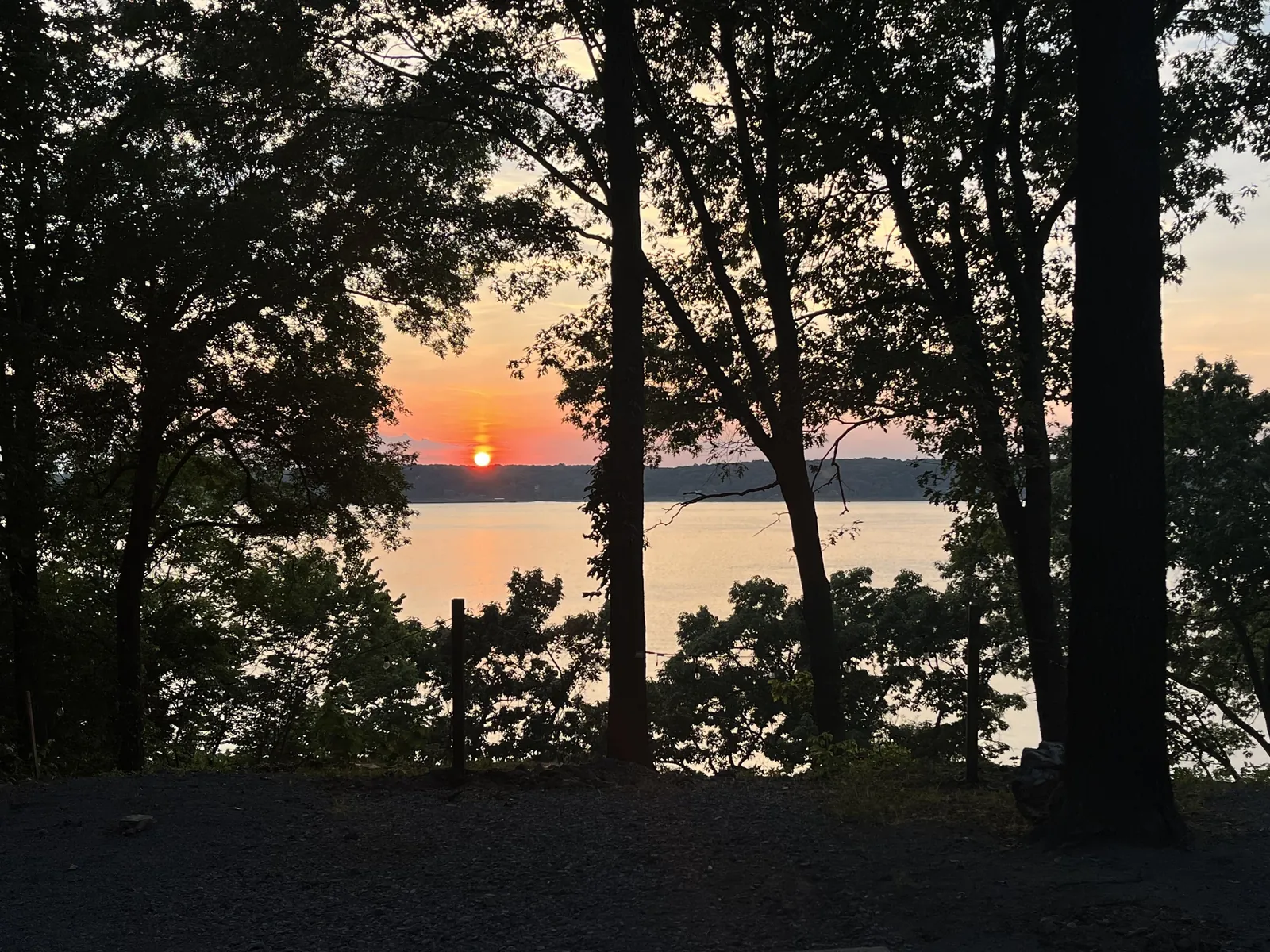
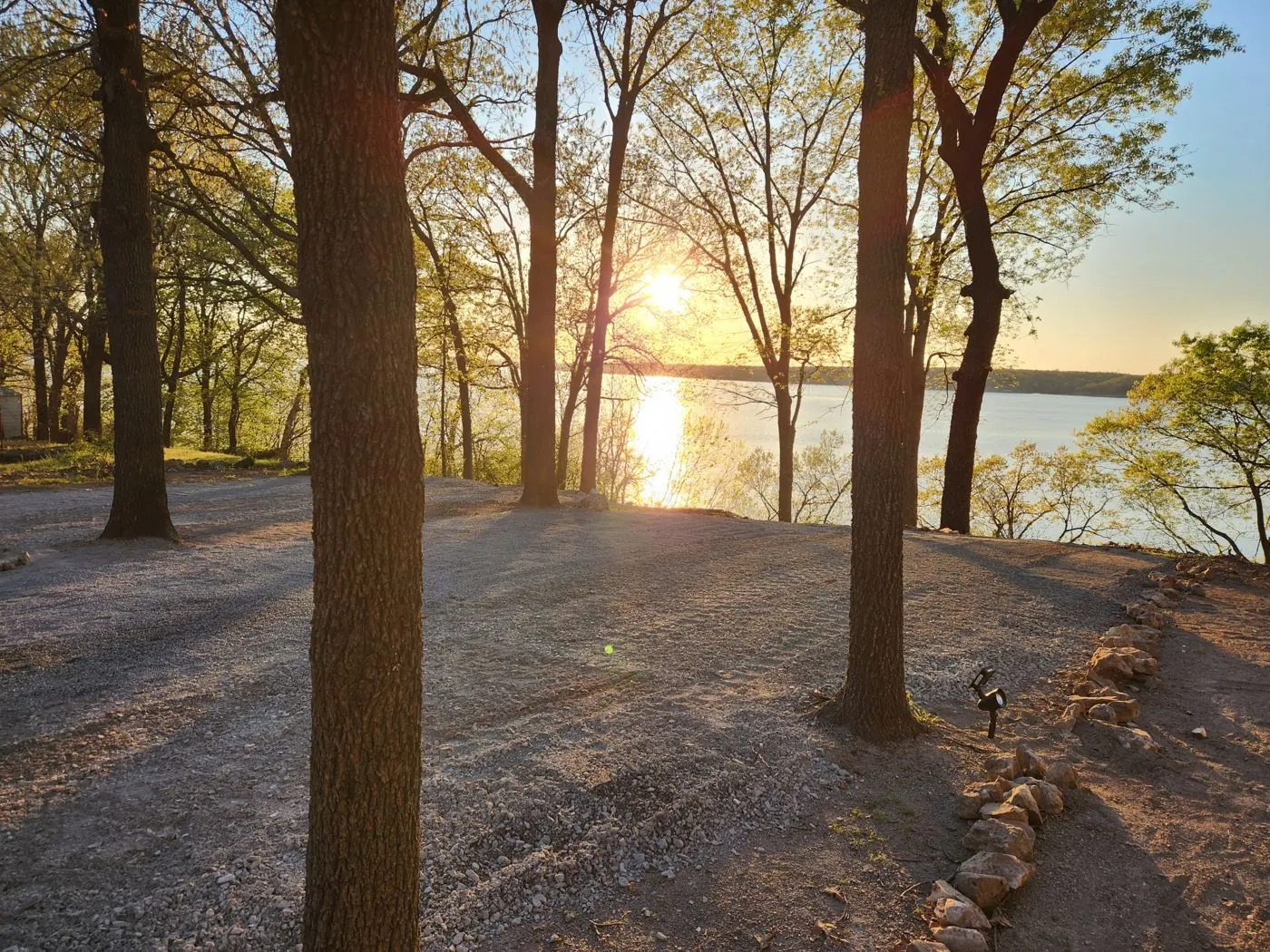
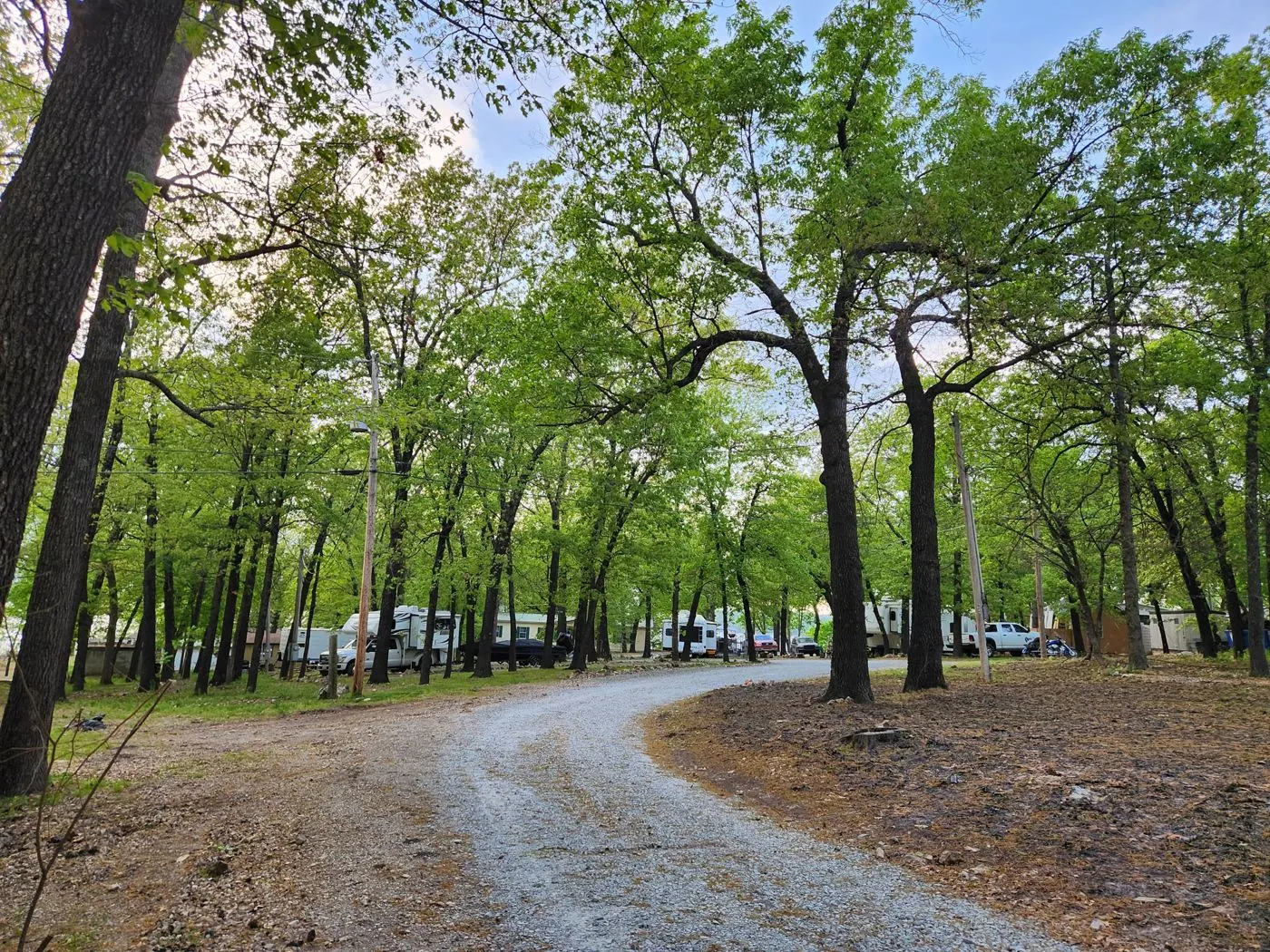
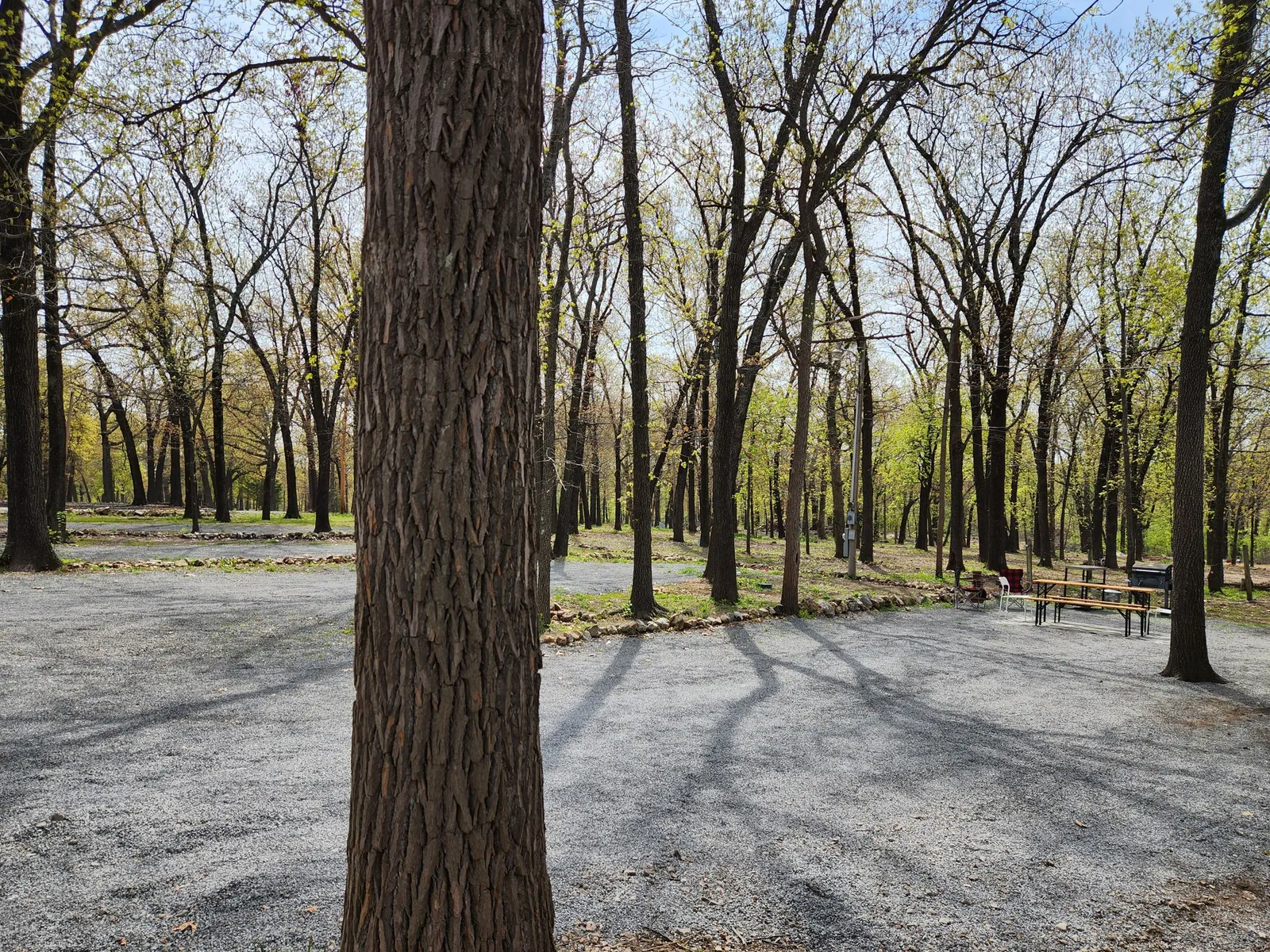
The shade trees at our park have been growing for more than 30 years, and we kept them when we renovated in 2022. Ready.gov’s thunderstorm page tells homeowners to trim or remove trees that could fall on the house. A camper owner cannot trim anyone’s trees, but you can look up.
When you settle in, study the branches above your rig. A dead limb or a leaning trunk is worth pointing out to whoever runs the park, and worth parking away from when you have a choice.
After a storm, walk the site before you settle back in. Ready.gov says to stay clear of fallen or broken power lines and to report them right away. A limb across your sewer hose is an annoyance. A downed line is an emergency, and the right move is distance and a phone call.
How do you plan a storm night when you work shifts?
If you work nights or leave before sunrise, the alert on your phone competes with a fan and earplugs while you sleep, and a tornado can form at any hour, according to the National Weather Service. Put the weather radio where you sleep, and tell a neighbor your hours. Most of our guests stay by the month, so the neighbors stay the same, and a neighbor who knows your schedule can knock on a door.
If your job is at the industrial park in Pryor, our post on living in an RV while you work at MidAmerica Industrial Park covers the 17 minute drive and the shift side of the schedule. If you are new to the county, our first month checklist for moving to Mayes County for work lists the storm plan as a week two task, right after the license and the tags. If you work at a hospital instead, our guide to travel nursing in northeast Oklahoma covers the drive times and what 13 weeks of housing costs.
On the road, the rule is the same as everywhere else. The Weather Service says a vehicle is not a safe place in a tornado and the best option is the closest shelter, so a warning on the drive home means pulling off at a sturdy building if you can, not racing the storm to the park.
What do you do after the storm passes?
- Keep the radio on and follow local officials until they say the threat is over. Ready.gov says to keep watching the Emergency Alert System, NOAA Weather Radio and local alerts after a tornado.
- Text instead of calling. Ready.gov asks people to limit calls to emergencies so the lines stay open.
- Stay clear of fallen or broken power lines, and report them.
- When you clean up, wear thick soled shoes and work gloves, according to Ready.gov.
- Look over the pedestal and the cords before you plug anything back in. If something looks scorched or wet, call management before you touch it.
Then check on the neighbors. Walking down the gravel to ask whether everyone is fine takes two minutes.
What storm season looks like at Lake Hudson RV Park
Management lives on site, so someone is close by when you get home from a shift and the weather turns, and the storm shelter is on the same property. Guests never have to guess where to go when a warning is issued. Our guide to what makes a long term RV park quiet and well run lists the storm plan among the first things to check at any park.
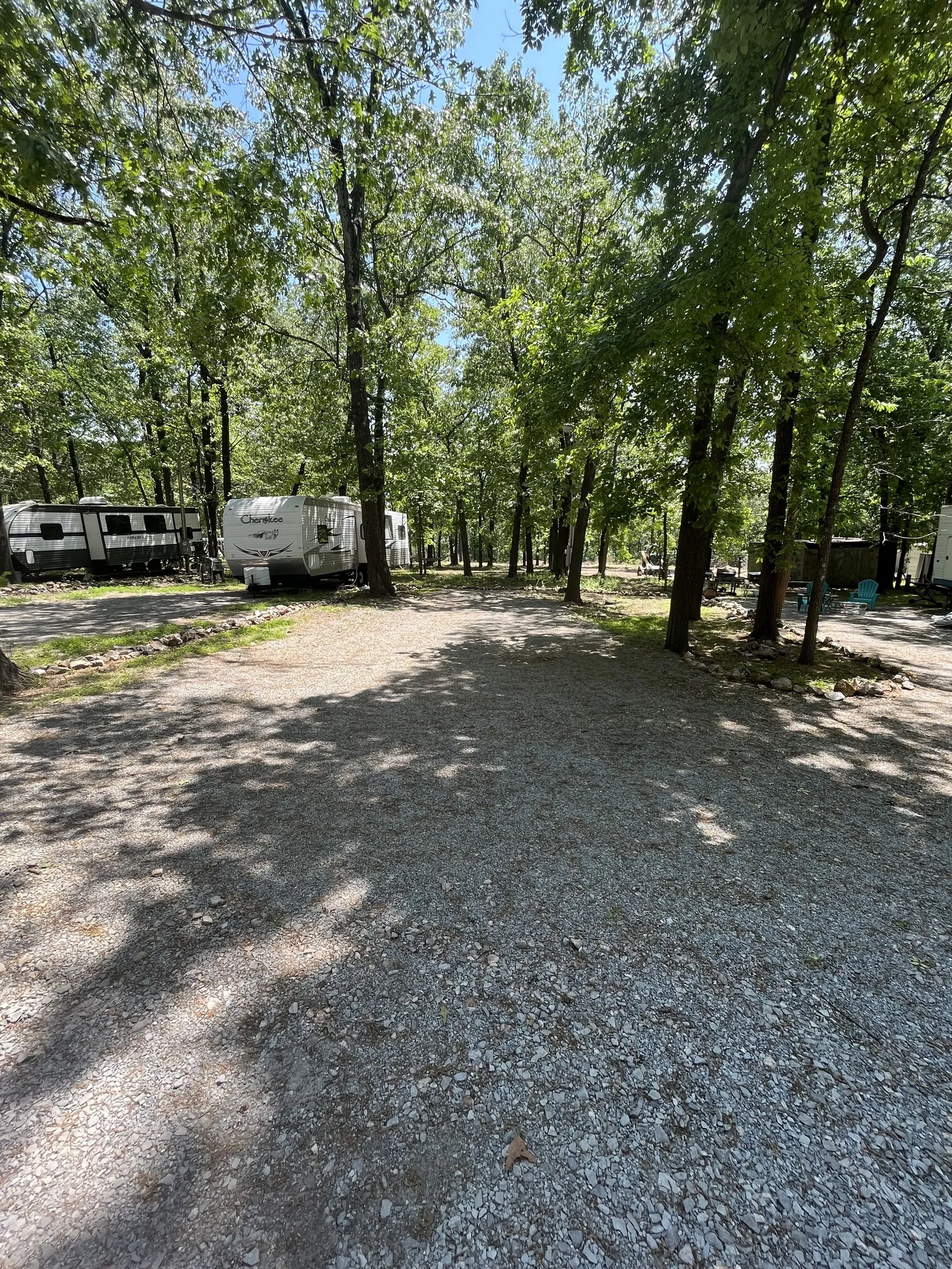
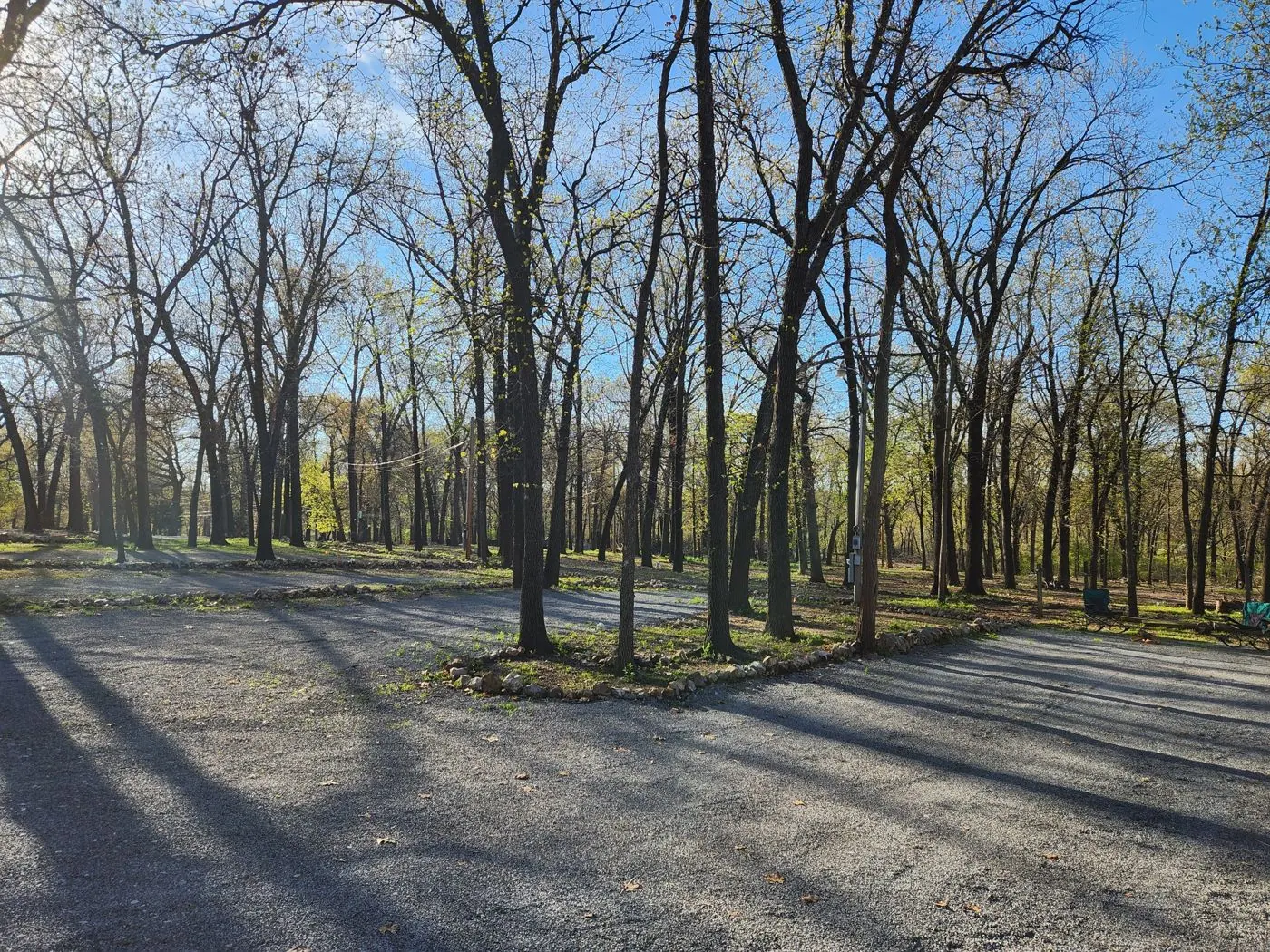
Space helps too. Our sites run about 35 feet wide and about 120 feet deep, roughly 4,200 square feet, so a rig has room around it. We have 67 full hookup sites with 30 and 50 amp service on every one. Monthly sites run $300 to $450 plus electric, a wooded site is a flat $350, and electric is about $100 a month for most guests. Nightly stays are $47, and the $100 deposit comes after we approve your stay. For a full breakdown, see our post on what a monthly RV site costs near Pryor.
Your RV should be 10 years old or newer, and older rigs are reviewed case by case from photos. We have 4.7 stars from 57 Google reviews. Tre N. wrote this about a stay.
Great spot to stay! The park was clean, quiet, and well maintained. Easy access and a relaxing atmosphere by the lake.
 Tre N.Google review
Our monthly RV sites page lists the three site types and what each costs.
Have your rig length and move in date ready, and we will tell you which sites are open.
What mistakes do RV owners make in storm season?
The common one is waiting to see it. Plenty of us grew up stepping onto the porch to look at the sky, and that habit works against you in a camper. By the time a funnel or a debris cloud is visible, a warning can already have been issued, and the Weather Service says to move at the warning.
Another is trusting one signal. A phone charging across the room and a radio with dead batteries both count as no signal at all. Test the radio on the first of the month, and keep the phone near the bed.
A folding chair or a grill lid becomes a projectile in high wind, and it can land on a neighbor’s rig. Putting the awning and the chairs away at the first watch is a favor to the whole row.
The last is driving off when a shelter is closer. Ready.gov is plain that a car offers no safe option in a tornado. None of these mistakes make you foolish, and the fix is a plan on paper before the season starts.
What comes after storm season?
Our guide to living in an RV full time in Oklahoma puts storm season alongside the rest of the year. When the weather turns cold, the next job is the hoses and the water lines, and our post on winterizing an RV in Oklahoma walks through it.
Sources
- NOAA National Severe Storms Laboratory, Tornado basics (peak season, time of day), checked November 10, 2026
- National Weather Service, Tornado safety (any time of day and year), checked November 10, 2026
- National Weather Service, Tornado watches and warnings, checked November 10, 2026
- National Weather Service, During a tornado (mobile homes and vehicles), checked November 10, 2026
- National Weather Service, Severe thunderstorm safety (criteria), checked November 10, 2026
- National Weather Service, Severe thunderstorm watches and warnings, checked November 10, 2026
- National Weather Service, During a severe thunderstorm, checked November 10, 2026
- National Weather Service, Wind safety, checked November 10, 2026
- National Weather Service, Turn Around Don't Drown (flood facts), checked November 10, 2026
- National Weather Service Tulsa, Weather Radio (Mayes County transmitters), checked November 10, 2026
- National Weather Service, Wireless Emergency Alerts, checked November 10, 2026
- Oklahoma Emergency Management, Tornadoes, checked November 10, 2026
- Oklahoma Emergency Management, Alerts and Warnings, checked November 10, 2026
- FEMA Ready.gov, Tornadoes, checked November 10, 2026
- FEMA Ready.gov, Thunderstorms and Lightning, checked November 10, 2026