When do you need to winterize an RV in northeast Oklahoma?
Before the first night that drops to 28 degrees, and in Tulsa that night arrives on November 14 in an average year. The National Weather Service office in Tulsa keeps a record of first and last freezes back to 1906. The first 32 degree night comes about November 3, and the first hard freeze at 28 degrees about November 14. A killing freeze at 24 degrees follows around November 26.
In many years the first freeze comes earlier than the average. The earliest 32 degree night on the Tulsa record was October 7, in 2012, and the earliest hard freeze was October 9, in 2000. Salina sits northeast of Tulsa, so treat these dates as a guide. A camper has thin walls and plumbing close to the outside air, so it loses heat quickly, and water left in the lines has little time to spare.
| Temperature | What it is called | Average first date | Earliest on record |
|---|---|---|---|
| 32 degrees | Frost or light freeze | November 3 | October 7, 2012 |
| 28 degrees | Hard freeze | November 14 | October 9, 2000 |
| 24 degrees | Killing freeze | November 26 | October 24, 1917 |
From the National Weather Service Tulsa frost and freeze records page, checked November 10, 2026. The averages cover January 1906 through May 2026.
If the calendar says mid November and the lines still hold water, winterize on the next dry afternoon. Rain makes every drain valve and every hose connection a worse job.
Are you storing the RV or living in it this winter?
The two plans need opposite things, and mixing them up causes avoidable freeze damage. A stored camper should have no water in its pipes at all. A camper you live in has to keep water flowing to the kitchen and the bathroom, so you protect the lines from outside instead of emptying them.
| Storing it | Living in it | |
|---|---|---|
| Water in the lines | None. Drained and filled with RV antifreeze | Yes. Kept flowing and kept warm |
| Heat | None needed, so the rig sits cold | Propane or electric, every day |
| Main risk | A cracked fitting or water heater found in spring | A frozen hose or line on the coldest morning |
| Main job | One long afternoon in the fall | Small jobs every week until March |
| Where the hookups matter | They do not, because the rig is shut down | Daily, since water, sewer and power keep the rig livable |
Storage steps come first below, and they work the same for a lake weekender who parks the camper at home and for a monthly guest who goes home for the holidays. Winter living advice follows the storage steps. For the whole year in a rig, see living in an RV full time in Oklahoma.
What does a Mayes County winter ask of an RV?
Mostly cold nights. The Tulsa station’s climatology page lists an average January low of 28.0 degrees for 1991 to 2020, so a typical January night is already below freezing before any cold snap arrives. The record January low there is minus 16 degrees. The average last 32 degree night in spring is March 29, which gives a freeze season that runs from early November into the last days of March.
That span is why we treat winter as a five month job. The cold is not constant, and afternoons often warm up enough to work outside, but the nights keep going below freezing for weeks at a stretch. A hose that was fine at 4 PM can be a solid tube of ice at 6 AM. Stored rigs, on the other hand, get through on antifreeze alone, as long as the antifreeze reached every low spot.
How do you winterize an RV for storage, step by step?
These steps follow the antifreeze method that Keystone RV explains for owners and the Camping World winterizing guide. Your owner’s manual wins any argument, because plumbing layouts differ from one rig to the next.
- Open every faucet, including the outside shower, and drain the fresh water tank. Take out the water filter cartridge, empty its housing and put the housing back.
- Empty the black tank first and the gray tank second, then flush the black tank and close both gate valves before you put the sewer hose away.
- Turn the water heater off for both gas and electric, let it cool, then pull the drain plug and open the pressure relief valve so the tank empties.
- Set the water heater bypass valves to the bypass position so antifreeze does not fill the tank. They sit on the water lines behind the heater, often under an access panel.
- Pull the caps on the low point drains and let the lines empty. Put the caps back when the water stops.
- Connect a bypass hose to the suction side of the water pump and put the other end in a jug of RV antifreeze. If your rig has no pump bypass, pour the antifreeze into the fresh water tank instead.
- Run the pump and open each cold faucet until pink antifreeze comes out, then each hot faucet, then the outside shower and the washer lines if you have one.
- Pour antifreeze into every sink and shower drain, and flush the toilet until antifreeze shows in the bowl and a little reaches the black tank. Turn the pump off and close all the faucets.
Compressed air is a second way to push water out of the lines. Camping World says to keep the pressure at 30 to 40 PSI at most, and its own steps still finish with antifreeze at the faucets and drains.
How much antifreeze do you need, and which kind?
Buy RV antifreeze that says nontoxic on the jug. Keystone is blunt about the other kind: automotive antifreeze is poisonous and does not belong in a drinking water system. The two sources we checked disagree on quantity. Camping World says most rigs need 2 to 4 gallons and suggests keeping 3 to 4 on hand. Keystone says 4 to 6 gallons, and at least 4 if you cannot bypass the pump and have to fill the tank.
We would buy 4 gallons and return what you do not open. A jug is cheap next to a cracked water heater, and running short halfway through the job leaves you with half the lines protected.
The amount for drains differs too. Keystone says about a quart in each drain trap, and Camping World says 1 to 2 cups per sink and shower drain. Follow your manual for the number and use these as the range.
What is easy to miss when you winterize?
The steps are simple, and the parts that get missed sit out of sight. These four are easy to skip.
- The water heater. Water left in it can freeze, expand and crack the tank or the fittings, which is the reason for the drain plug and the bypass.
- The ice maker line. If your rig has a residential refrigerator, do not put antifreeze in the ice maker line. Drain that line with the others.
- The tankless water heater. Both guides send you to the manufacturer’s manual for those units, so do not guess.
- The low point drains. A line that looks empty can still hold water in a low bend, and the caps stay on until you pull them.
Camping World adds one more rule for a stored rig. Once the lines hold antifreeze, do not run the sinks or the toilet. Anyone staying in the rig carries in jugs of drinking water and takes wastewater to a dump station. That rule is the dividing line between storing a rig and living in it.
What changes if you live in the RV all winter?
Everything about the water. You cannot fill your kitchen lines with pink antifreeze and still wash dishes, so the plumbing stays full of water and the job becomes keeping that water above 32 degrees. That means the parts outside the walls get the attention first: the hose from the pedestal, the sewer hose, the water inlet and the tanks.
etrailer’s winter living guide starts with the hose. A heated water hose saves you from draining and disconnecting a regular hose every evening. Heat tape on the fresh water hose and the sewer hose does a similar job on a hose you already own, and a tank heater keeps the fresh water tank usable in a freeze. Keeping the gray tank valve closed also limits the cold air that gets into the system, and the guide suggests adding about a quart of RV antifreeze to the gray and black tanks.
Tape only works when it sits close to the connection that faces the weather and has power. A heated hose still has a plug at the pedestal, and the plug can trip or come loose overnight. Walk out on the first hard freeze each year with a flashlight and put a hand on the hose, because a frozen line is easier to catch at 10 PM than at 6 AM. If a line does freeze, thaw it with a hair dryer or warm towels and never with an open flame.
Does skirting help, and what goes under the rig?
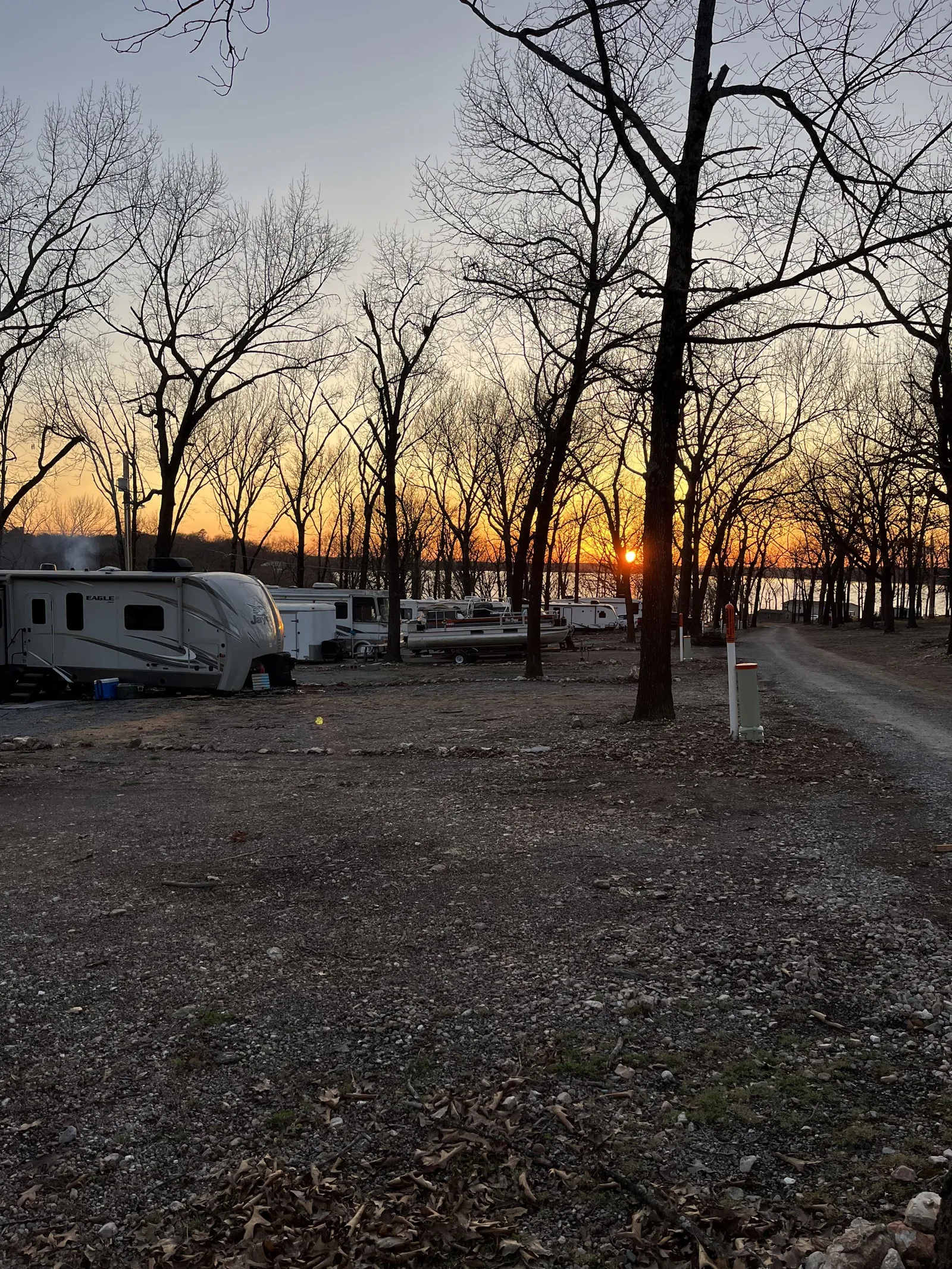
Skirting is a wrap around the base of the RV that blocks wind and snow from the underside. etrailer says it helps keep the interior warm, and some owners add a small heater underneath to keep the underbelly from icing. A steady north wind turns every gap under a rig into a draft.
Be careful about what you put under there. A heater beneath a rig sits in a closed space with wiring and a propane line nearby, so the fire risk is real. Read your heater’s instructions, keep it well clear of anything that burns, and check with us if you are unsure.
etrailer suggests thermal curtains or foam insulating boards over the windows and thick rugs over a cold floor. None of these is a big project.
How do you heat an RV safely?
Carefully, with a working carbon monoxide alarm. The Consumer Product Safety Commission is direct on one point in its camping heater guidance: never use fuel burning portable heaters or lanterns while sleeping in an enclosed space such as a camper. Carbon monoxide has no color and no smell, and the early symptoms of headache, dizziness, weakness and nausea can pass for a cold or the flu.
The agency’s winter safety release from February 2024 adds the rest. Put a battery powered carbon monoxide alarm outside each sleeping area and test it monthly. Keep every side of a portable heater at least 3 feet from beds, curtains and anything else that burns, and never leave one running while you sleep. Plug an electric heater straight into a wall outlet and keep it off power strips. If an alarm sounds, get outside and call 911.
The same release says to keep snow and ice cleared away from the outside vent of any fuel burning appliance. Electric is billed by use at our park and runs about $100 a month for most guests, so sealing drafts is worth doing before you buy another heater.
Why does the inside of an RV drip in winter?
Warm air from cooking and showers meets a cold wall and turns to water. etrailer says that indoor heat against cold outside air causes condensation that can freeze and make heating harder. The fix is simple. Open a roof vent or a door a crack when you cook, and run a dehumidifier regularly.
Vent covers cut heat loss, but they should come off easily if you burn gas, and your carbon monoxide detector should be working before you seal anything. Propane is a main heat source, so etrailer suggests watching tank levels and having larger tanks that can last a week or more of cold weather. Look at the gauge on the same day you check the hose.
What is winter like at Lake Hudson RV Park?
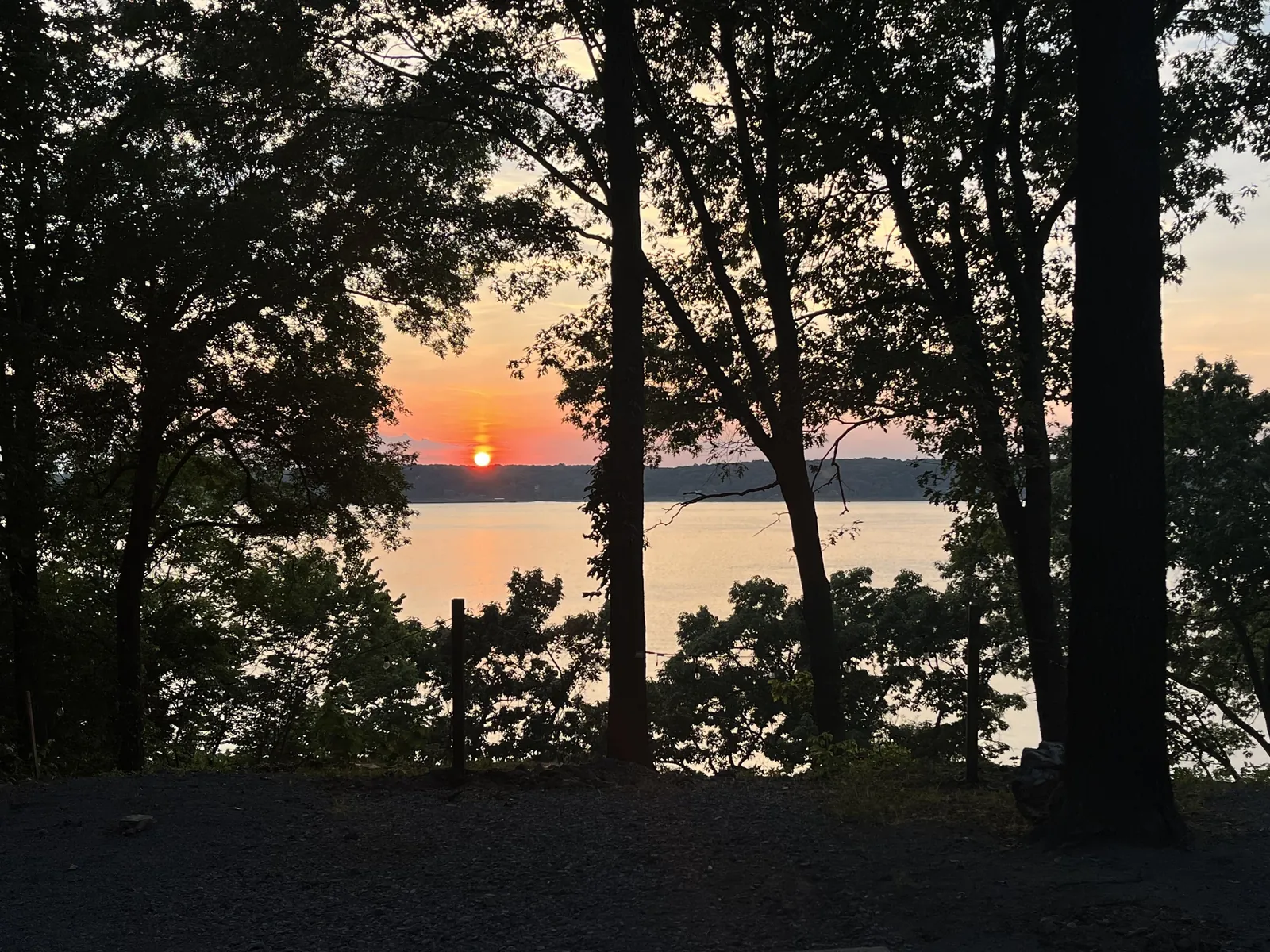
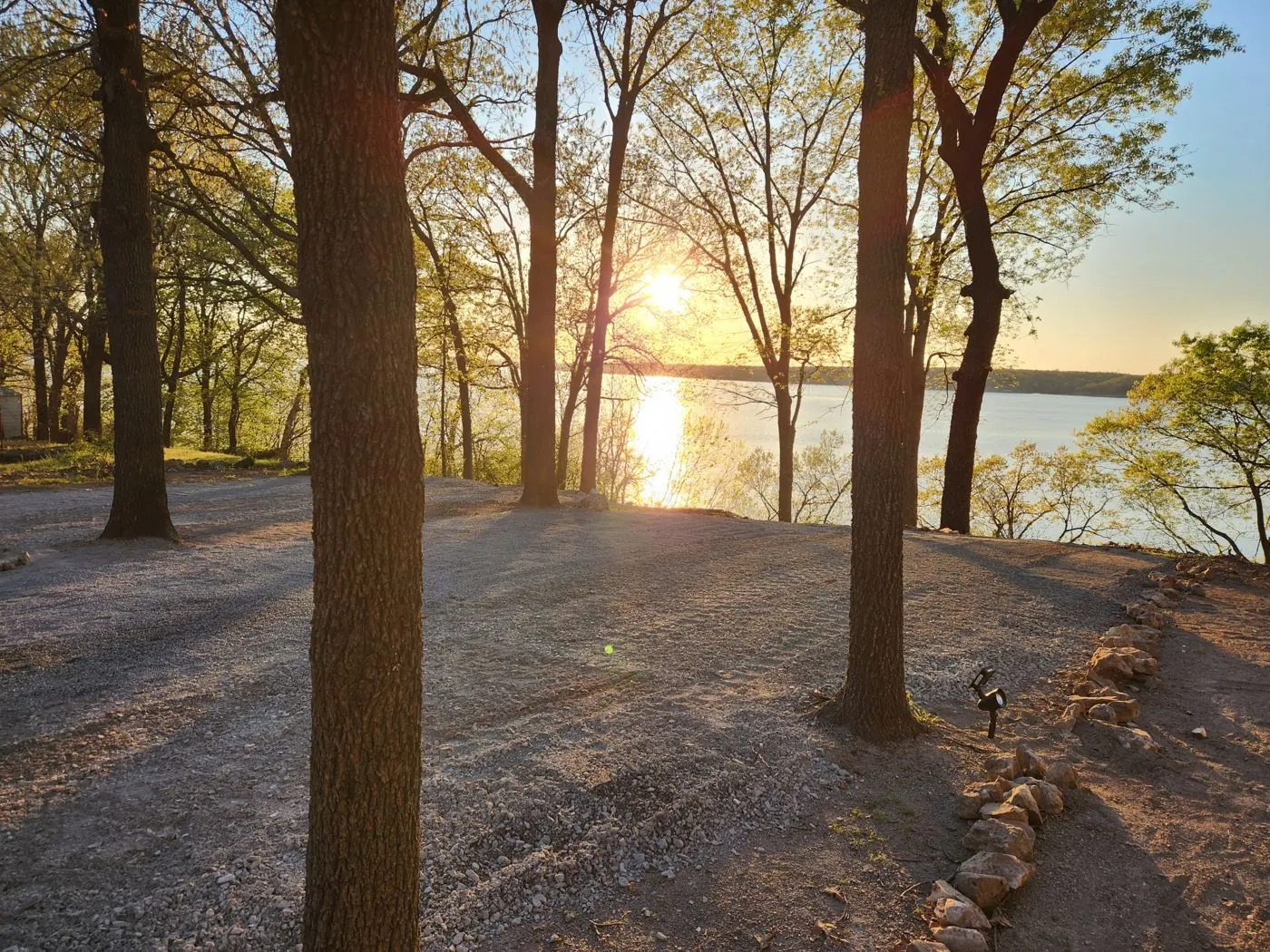
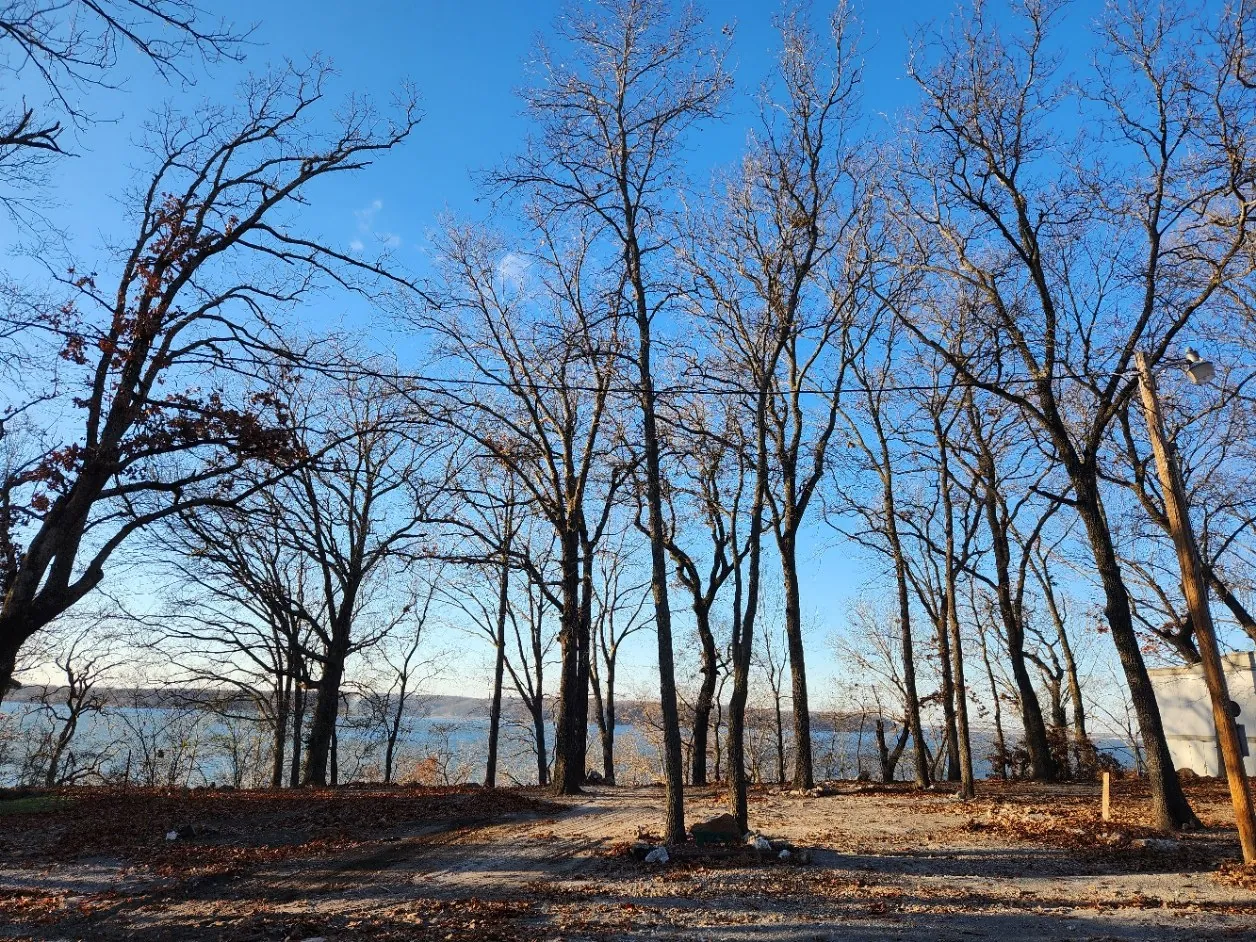
In winter the leaves drop and the lake shows through the bare trees. The photo at the top of this post shows the view.
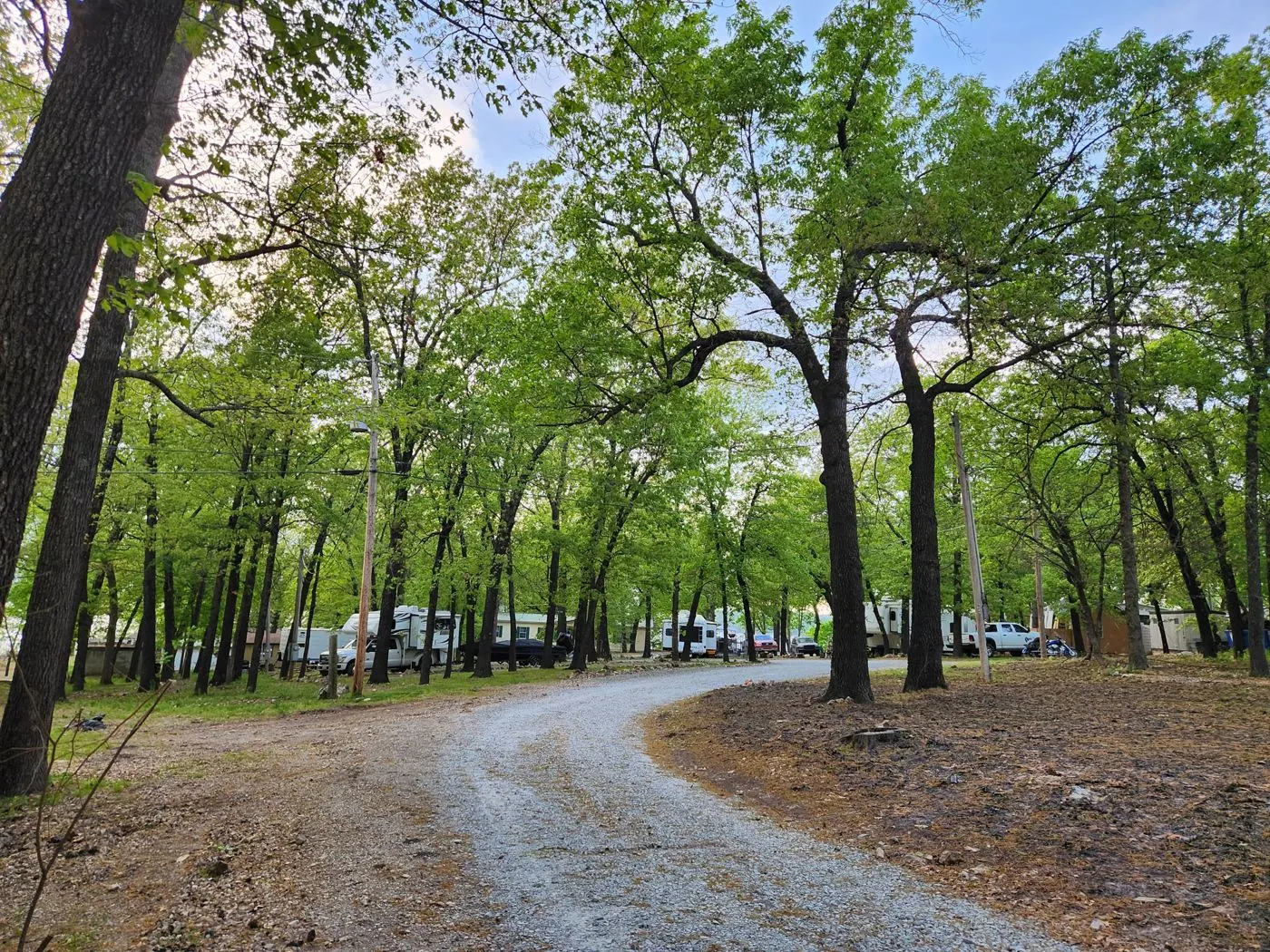
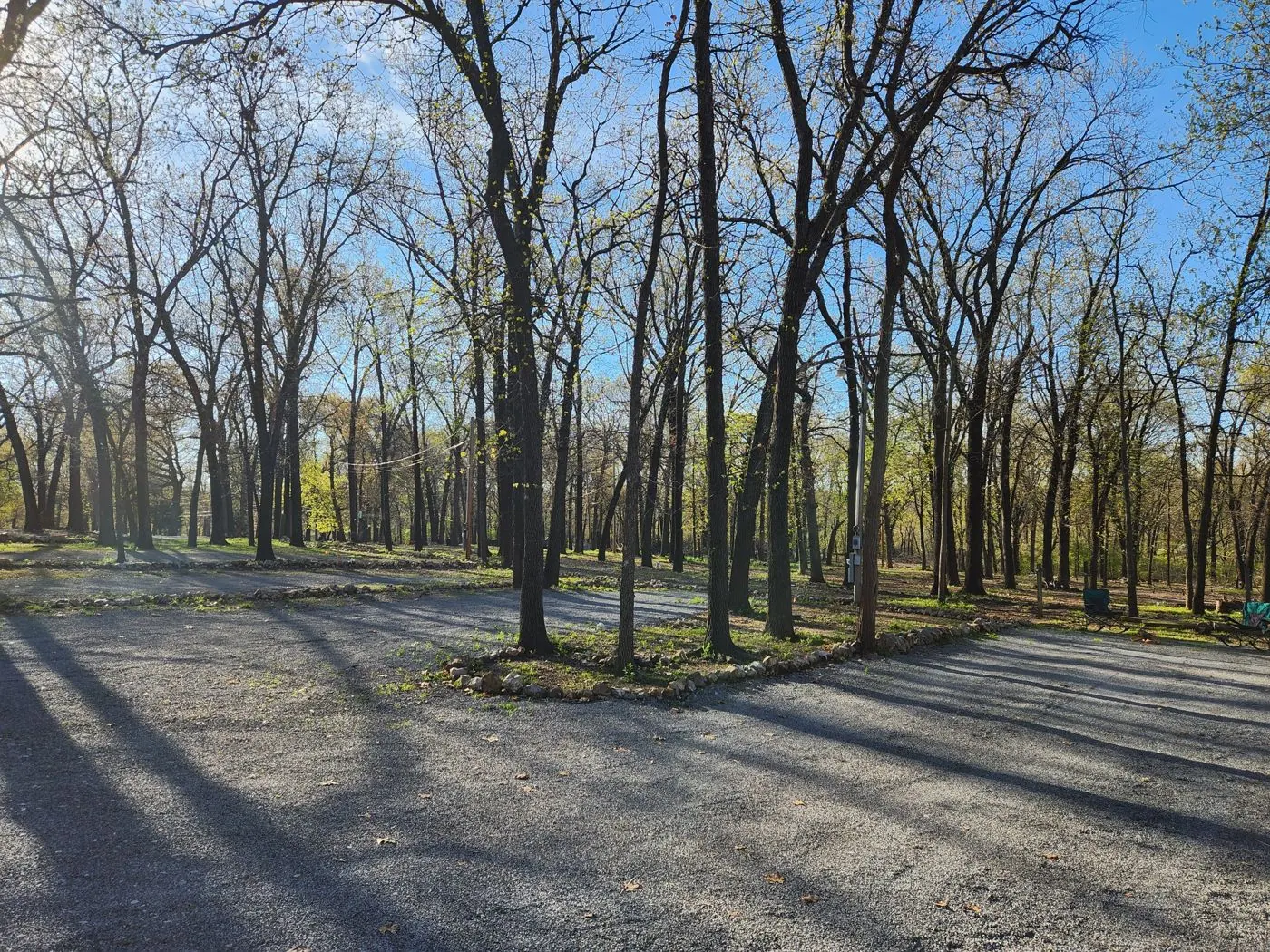
Most of our guests stay by the month. Every site has full hookups and 30 and 50 amp power, and a typical site is about 35 by 120 feet, around 4,200 square feet, with room for a truck beside the camper.
A wooded site is a flat $350 a month and a lake view site is $450. Budget sites start at $300, and all of them are plus electric. The $100 deposit comes after we approve your stay, and your RV should be 10 years old or newer, with older rigs reviewed case by case from photos. For a full month of numbers, see what a monthly RV site costs near Pryor. We have laundry on site and a storm shelter for the other kind of Oklahoma weather, covered in RV storm season in Mayes County. We have 4.7 stars from 57 Google reviews, and one guest wrote this.
Great spot to stay! The park was clean, quiet, and well maintained. Easy access and a relaxing atmosphere by the lake.
 Tre N.Google review
Our monthly RV sites page lists each site type and what it includes.
Tell us your rig length and when you want to move in, and we will tell you which sites are open.
What should you do the night before a hard freeze?
The night before a hard freeze, work through this list, mostly outside.
- Check the forecast low. Anything at or near 28 degrees is the night to act.
- Put on the heated hose and heat tape, or switch them on, and confirm the plug at the pedestal is snug.
- Disconnect and drain any hose that has no heat on it, and carry in a couple of jugs of water for the morning.
- Check the skirting for gaps along the bottom edge and close anything the wind has pulled loose.
- Look at the propane gauge, and swap the tank if it is under a quarter full.
- Test the carbon monoxide alarm, and open a roof vent a crack if you run a built in gas furnace.
- Leave the cabinet doors under the sink open so warm air reaches the pipes.
On many rigs the sink plumbing sits against an outside wall, and an open cabinet door lets the room’s heat reach the pipes.
What mistakes do people make with RV winterizing?
The common one is buying the antifreeze and skipping the bypass. If the bypass is left open, the jug can empty into the water heater tank before any reaches the faucets, and then you are back at the store. The valves sit behind a panel and the instructions are often in a drawer.
The second is treating a stored rig and a lived in rig the same way. If you drain half the lines in October, you will have no water for a December weekend. Decide which plan you are on before you start, and stay on it for the season.
The third is trusting one source of heat. A heated hose with no backup stops working when its plug trips, so keep a second way to get water. A fuel burning heater with no alarm is a separate problem, so keep a working alarm too.
The last is waiting for the perfect day. November weather in northeast Oklahoma can swing hard inside a week, and the dry afternoon you wanted can disappear. Winterize on a clear day when the hoses are dry, even if the forecast shows the freeze is still days away. For the work side of a winter move, see RV living near MidAmerica Industrial Park.
When can you take the antifreeze out in spring?
Later than the first warm weekend. The Tulsa station’s average last 32 degree night is March 29, and the latest 32 degree night on the Tulsa record came on May 2, in 1909, so a camper that was drained in November is safest left alone until the first week of April. A 70 degree Saturday in February is a reason to wash the truck and not a reason to flush the lines.
Camping World’s advice is to winterize in the fall and take the antifreeze out in the spring every year, even though sealed antifreeze can stay stable for 2 to 5 years. Your owner’s manual lists the spring steps, which undo the fall work in reverse. Before anyone drinks from the system, flush the fresh water lines, and check every fitting for a drip with the pump running, since a crack from a hard freeze shows itself the first time the lines hold pressure.
A rig you lived in all winter has no spring job apart from checking the hoses and the heat tape for wear. The lines were never emptied, so nothing has to be put back.
Sources
- National Weather Service Tulsa, Frost and Freeze Records and Averages, checked November 10, 2026
- National Weather Service Tulsa, Tulsa Climatology (1991 to 2020 averages), checked November 10, 2026
- Keystone RV, Plumbing winterization: the antifreeze method, checked November 10, 2026
- Camping World, How to Winterize an RV (August 28, 2026), checked November 10, 2026
- etrailer, How to survive the winter in your RV, checked November 10, 2026
- U.S. Consumer Product Safety Commission, Portable Heaters and Camping Equipment, checked November 10, 2026
- U.S. Consumer Product Safety Commission, Stay Safe While Staying Warm This Winter (February 26, 2024), checked November 10, 2026