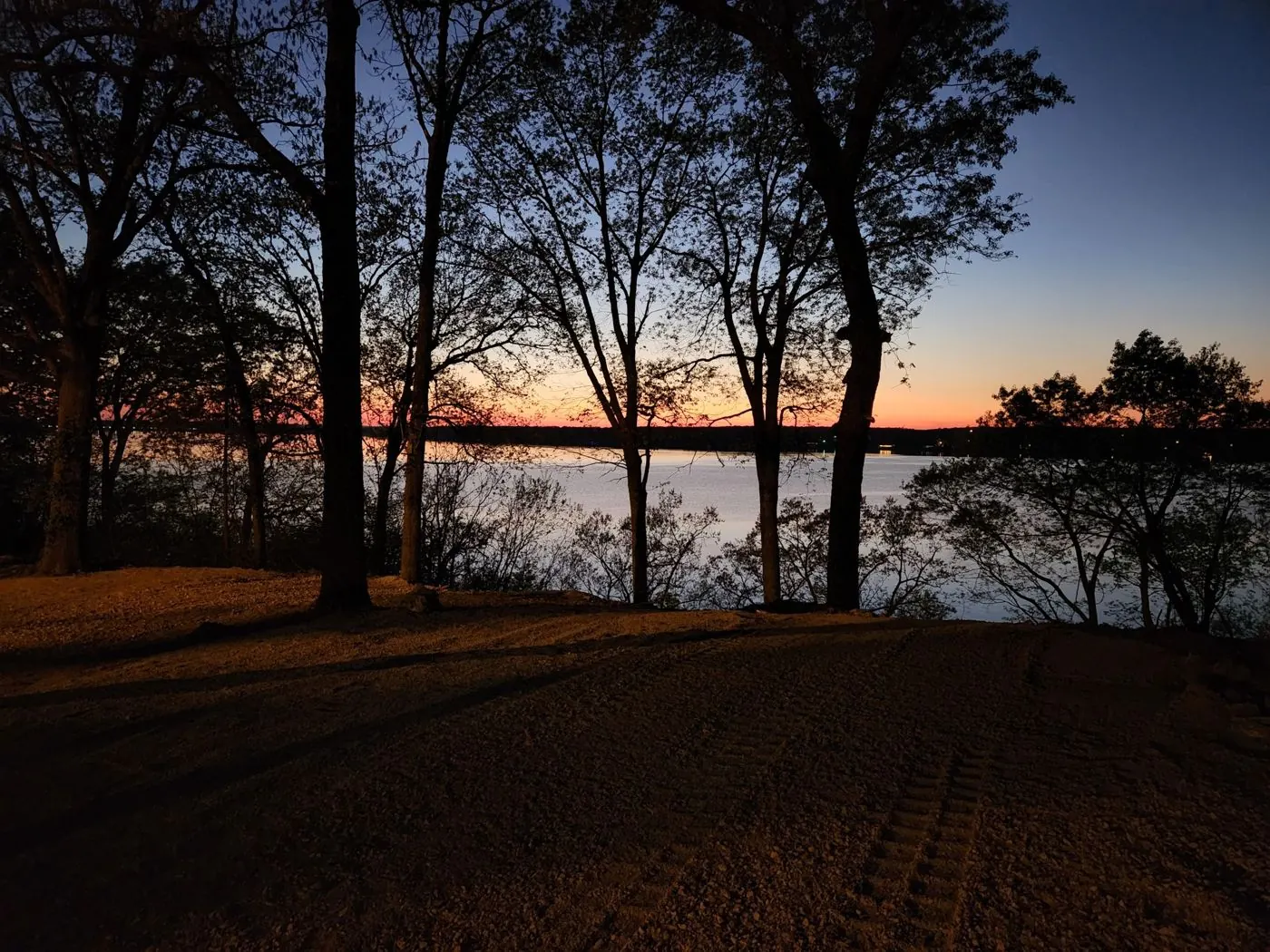
When is paddlefish season near Salina?
Spring. The Oklahoma Department of Wildlife Conservation says the snagging season is usually beginning sometime in March and ending in late April, which is the early spawning run. That wording comes from the department’s paddlefish angler guide, published in July 2023. The department’s current regulations page does not print fixed season dates, so treat March to late April as the usual window and check the page before you plan a trip.
Rain and water temperature set the exact weeks. The same guide says spawning runs from March through June and that the fish run when water temperatures reach 50 to 60 degrees Fahrenheit. The peak, it says, comes near 60 degrees after moderate to heavy rain. A cold, dry March can push the run later, and a warm wet one can pull it early. Anglers who book a site for a week in late March and a week in mid April give themselves two shots at it.
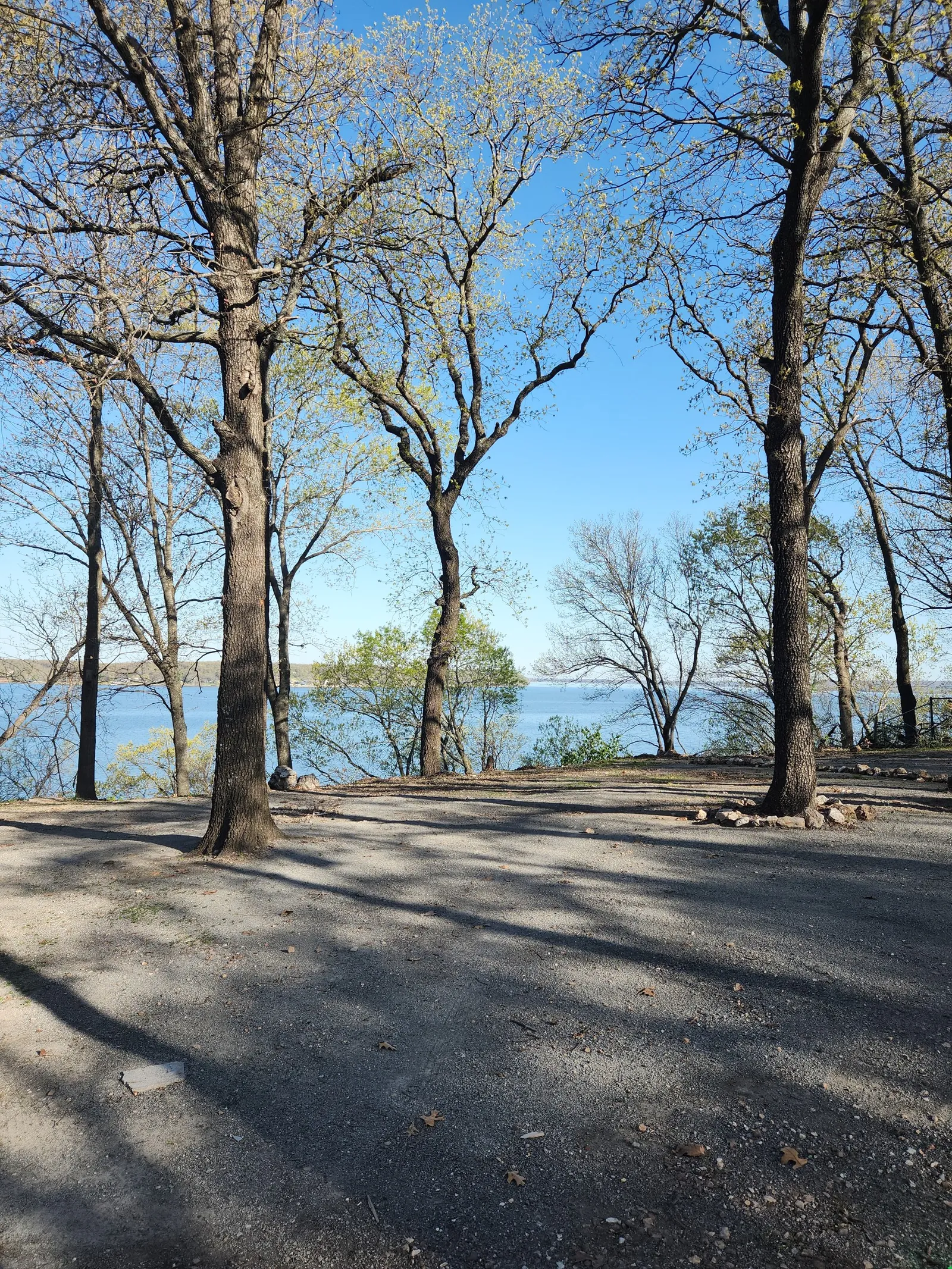
For a Lake Hudson reference point, the department’s Lake Hudson page lists paddlefish among the species of interest and shows a catch photo from the lake dated March 29, 2026. That is a single fish, so read it as a hint about timing and not a forecast.
We are an RV park in Salina, half a mile from two public boat ramps on Lake Hudson. We are not guides, and we do not sell fishing trips. The rules, permits and fees below come from the wildlife department and were checked on November 10, 2026. Rules change, so open the department’s pages again before you go.
What does it take to fish for paddlefish in Oklahoma?
Two pieces of paper, and one of them costs nothing. You need an Oklahoma fishing license, and you need a free paddlefish permit on top of it. The department’s paddlefish regulations page says the permit is required in addition to a fishing license for residents and nonresidents alike, regardless of age or exemption status. If you are normally exempt from a fishing license, you still carry the permit.
The permit is free and runs from January 1 to December 31, so you renew it every year. You can get it at gooutdoorsoklahoma.com or through the Go Outdoors Oklahoma app. The department’s headquarters and license vendors issue it too. You have to carry it on you while you fish or while you have a paddlefish or any part of one, and it can be on your phone or on paper. Fishing license prices come from the department’s license fees page, and they are in the table.
| Item | Cost | What to know |
|---|---|---|
| Paddlefish permit | Free | Required for everyone who fishes for paddlefish. Valid January 1 to December 31. |
| Resident annual fishing license | $31 | For residents 18 or older. Valid 365 days. |
| Nonresident annual fishing license | $81 | For nonresidents 18 or older. Valid 365 days. |
| Resident 1 day fishing license | $11 | One day of your choice. Expires at midnight. |
| Nonresident 1 day fishing license | $26 | One day of your choice. Expires at midnight. |
Prices from the Oklahoma Department of Wildlife Conservation license fees page, checked November 10, 2026. The license page points to a separate list of exemptions, so check it if you think you qualify.
A one day license can make sense for a single trip to the water, but a spring run can take several mornings. If you plan to fish more than a few days in the year, compare the prices in the table, because the annual license may cost less than several day licenses. Either way, get both papers before you drive to the water, not at the ramp, where phone signal can be weak.
What are the paddlefish snagging rules?
Paddlefish eat tiny plankton, so you cannot lure them with bait or a lure the way you would a bass. Anglers snag them, which means a heavy weighted hook is dragged through the water until it catches a fish as it passes. The wildlife department says that is the preferred method for exactly that reason. The rules are tight, and they are worth reading slowly.
The department’s regulations page, as of November 2026, sets the numbers. The daily limit is 1 fish, and the annual limit is 2 fish per angler. When you keep a fish, you tag it right away with your customer ID number and you stop snagging for the day. You cannot catch a paddlefish, keep it and release it later. Decide before you tag, because the tag ends the choice.
Gear is limited too. Each angler may snag with one rod and reel and either one single hook or one treble hook, and every hook has to be barbless, meaning the barbs are removed or completely closed. Gaff hooks and any device that injures the fish are illegal when you land one, except when bowfishing.
| Rule | What the state says |
|---|---|
| Daily limit | 1 fish. After you keep one, stop snagging for the day. |
| Annual limit | 2 fish per angler. |
| Tagging | Tag the fish immediately with your customer ID number. The tag stays on until the fish reaches your residence. |
| Culling | Not allowed. A kept fish cannot be released later. |
| Reporting | Report every harvested fish online within 24 hours. |
| Hooks and rods | One rod and reel. One single hook or one treble hook. Barbless. |
| Night closure | Snagging of any fish is closed from 10 p.m. to 6 a.m. year round east of I-35 and north of I-40. |
From the Oklahoma Department of Wildlife Conservation paddlefish regulations page, checked November 10, 2026.
The department’s page says snagging of any fish is closed from 10 p.m. to 6 a.m. year round east of I-35 and north of I-40, with an exception for one stretch at Miami City Park. Mayes County sits inside that part of the state, so a late night session at Lake Hudson breaks the rule. Plan your day around 6 a.m. to 10 p.m.
Where can you snag paddlefish near Salina?
Start with what the state names. The department’s angler guide lists the waters below the dams at Grand, Hudson, Chouteau Bend Low Water, Fort Gibson, Oologah and Kaw as top spots, and it names Miami Park on the Neosho River as the bank fishing paddlefish capital of the world. Of those places, the Hudson dam is the one that sits on our lake. Chouteau Bend Low Water and Miami Park are other named spots on the river system, and we have not mapped the drive to either for you.
The guide also tells you what kind of water to look for, and that is the part that helps on a lake you do not know. The guide says bank anglers do best in tailwaters below dams and along river banks, and it points to gravel bars and low water dams. It also names river mouths, where inflowing water meets a lake.
The department’s tailwater rules page defines a tailwater as the first 1,000 feet below any federal or Grand River Dam Authority dam. It says snagging is prohibited in those tailwaters, with the Fort Gibson tailwaters as the exception, and it sends you to the paddlefish rules for anything more. That page does not mention Lake Hudson’s tailwater by name. The angler guide, written for a general audience, lists the water below Hudson dam as a hotspot. We cannot fully reconcile those two pages from our desk.
Do not snag within 1,000 feet of the dam unless the department or the current Go Outdoors Oklahoma app tells you that stretch is open to it. Call the wildlife department before your first morning and ask where on the Hudson tailwater snagging is open this year. The call is short, and the answer is worth more than a guess.
There is a second reason to be careful below the dam, and it has to do with safety. The Grand River Dam Authority closed public access to the rocks that form the low water dam on the Grand River below Robert S. Kerr Dam. KTUL reported the change in September 2023. The authority said anglers were stranded on the rocks when water was released from the dam above. It also said sirens and flashing lights go off before the water rises. Stay on the shoreline, away from the rocks, and treat a siren as an order to leave.
The lake itself is the other option. The Lake Hudson page lists public ramps that include the Lions Club ramp just north of the Highway 20 bridge in Salina, a ramp at the north end of Kerr Dam, and the Snowdale area of Grand Lake State Park on the Wolf Creek arm north of Highway 20. The Grand River Dam Authority runs the ramps, and our post on Lake Hudson boat ramps near Salina compares them. If you have a boat, launching from one of those and working the places the angler guide describes is the approach most open to you. The guide’s boat advice is to anchor and snag from a fixed spot or troll in an S shaped pattern with the weight on the bottom or hanging above it.
What gear do you need to snag a paddlefish?
The department’s angler guide suggests an 8 to 14 foot extra heavy rod, 30 to 100 pound test line and a barbless treble hook in size 8/0 to 14/0. It adds a casting weight of 2 to 8 ounces, and the guide’s own editor picks 4 ounces. If you are used to a bass rod, it will feel like swinging a fence post, because you are throwing a heavy weight across current and dragging it back.
On the bank, the guide says to cast across the current and sweep the rod tip 90 degrees to either side of your body, reeling up the slack after each swing. Then you repeat that until something heavy stops the line. The guide warns anglers not to make swings within 20 feet of the bank, because tackle can fly toward people standing on shore. If a crowd lines the bank, give everyone room.
A big fish is a lot to carry up a muddy bank, and the permit has to be on your person while you do it. Load the permit on your phone and carry a tag you can use the moment you keep a fish. A cooler and a sharp knife handle the rest, and spring mornings on the water start cold, so wear layers.
The department says males spawn at about 4 to 9 years old and females at 6 to 12. A paddlefish you take home may be a decade old. That is a reason to keep only the one you want. If you mean to release a fish, do it before you tag it.
How do you get a paddlefish home legally?
The state wants to know about every one you keep. The regulations page says to report each harvested fish within 24 hours, using the state’s electronic check in at GoOutdoorsOklahoma.com. It also names the Paddlefish Research Center during business hours as a place to do it. A separate department paddlefish page says that center is closed indefinitely, after about 15 years of work. The two pages disagree, so report online and do not drive to the center on the word of one page.
Keep the tag on the fish and the fish separate from anyone else’s until it gets to your residence. Eggs have rules of their own. The page limits you to one fish’s eggs still attached to the membrane, or no more than 3 pounds of loose eggs. It also says raw, processed or frozen eggs may not be shipped or taken out of Oklahoma, and that all internal organs must be removed before you leave the state.
Visiting anglers need to plan for that last rule. If you tow your camper home to another state after a week at the lake, clean the fish before you pull out. Leave the eggs behind unless you are keeping them inside Oklahoma. Read the page once more the night before you leave. A cooler full of fish and a roadside stop with an officer is a bad end to a good week.
Cleaning a big fish at a campsite calls for some manners. Do it where your neighbors will not have to smell it, bag the waste, and ask us where it can go. The next site over shares the breeze.
Why stay at Lake Hudson RV Park for paddlefish season?
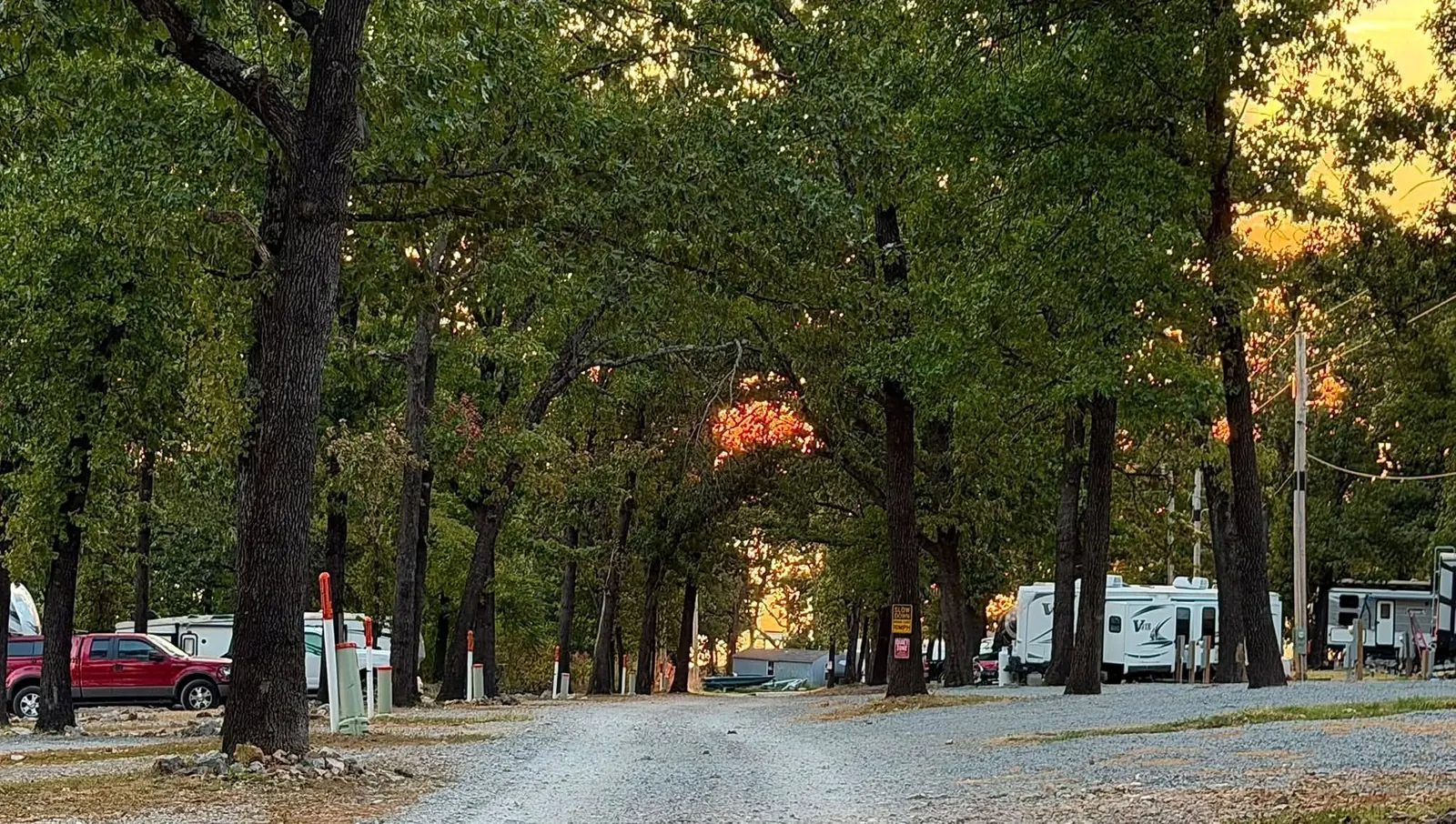
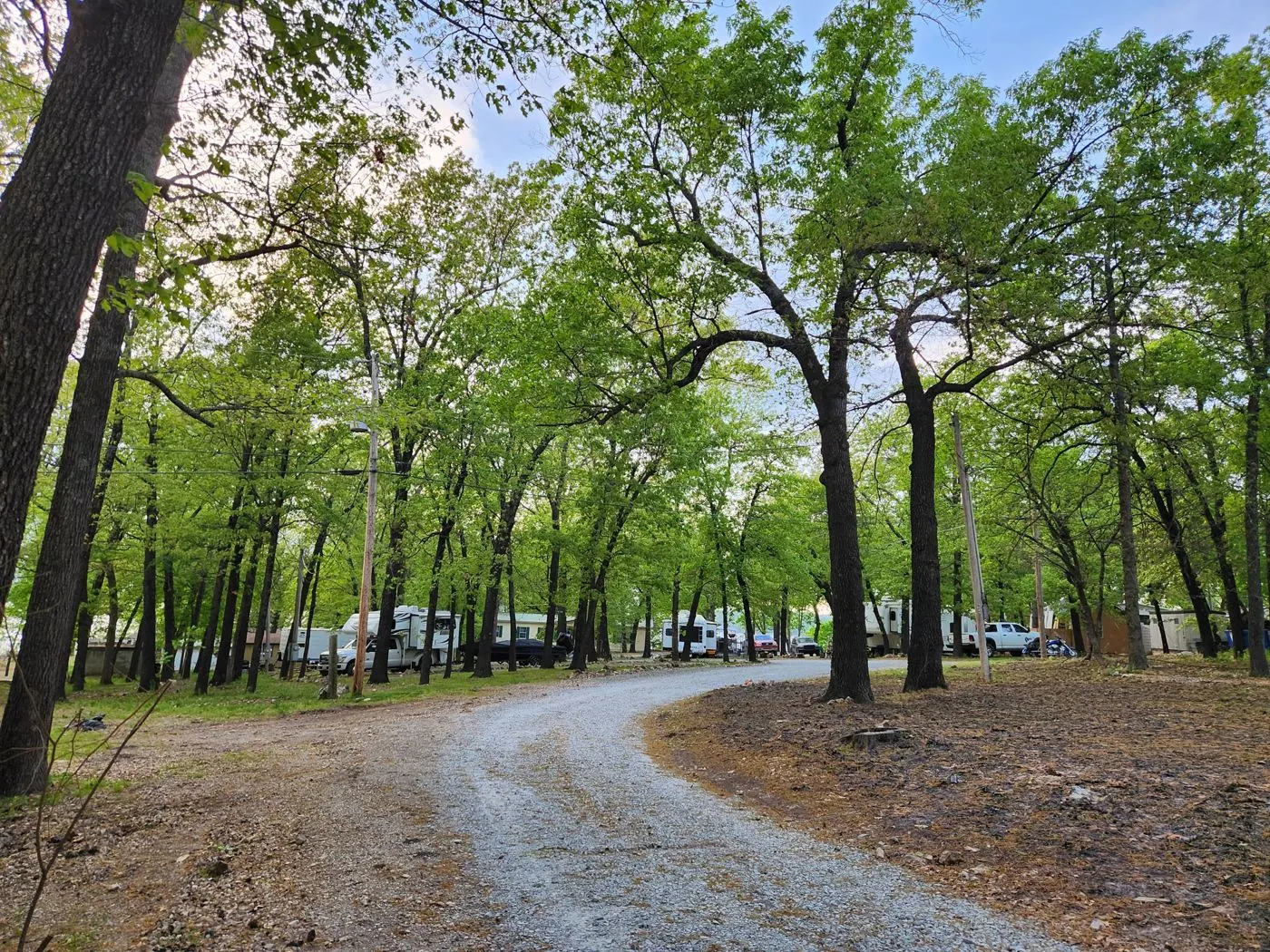
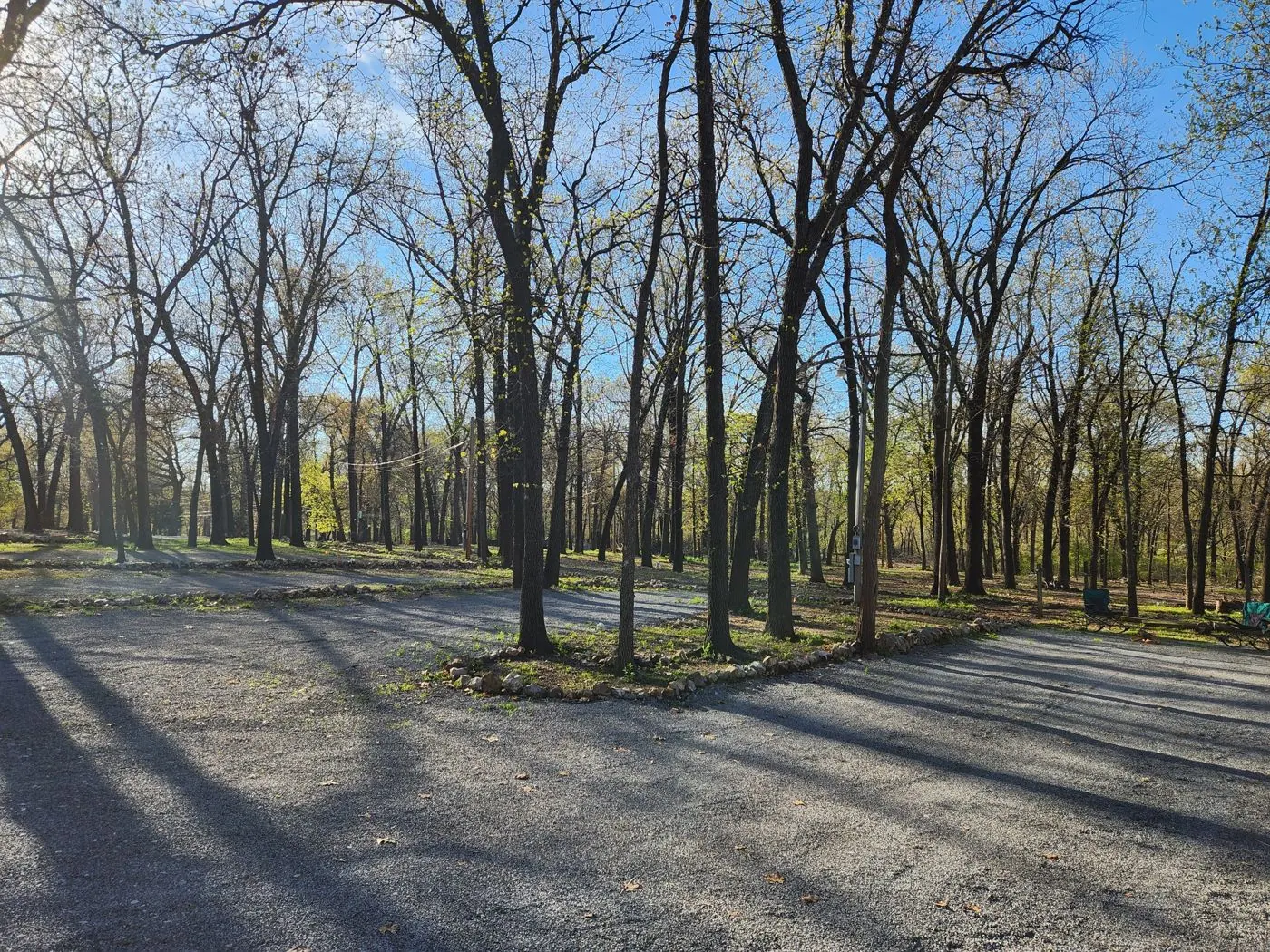
A paddlefish week means early mornings and a truck that needs somewhere to sit. Our typical site is about 35 feet wide and 120 feet deep, so on many of them a boat and trailer fit beside your camper. Budget sites are smaller and have no room for a boat, so tell us when you call if you are towing one.
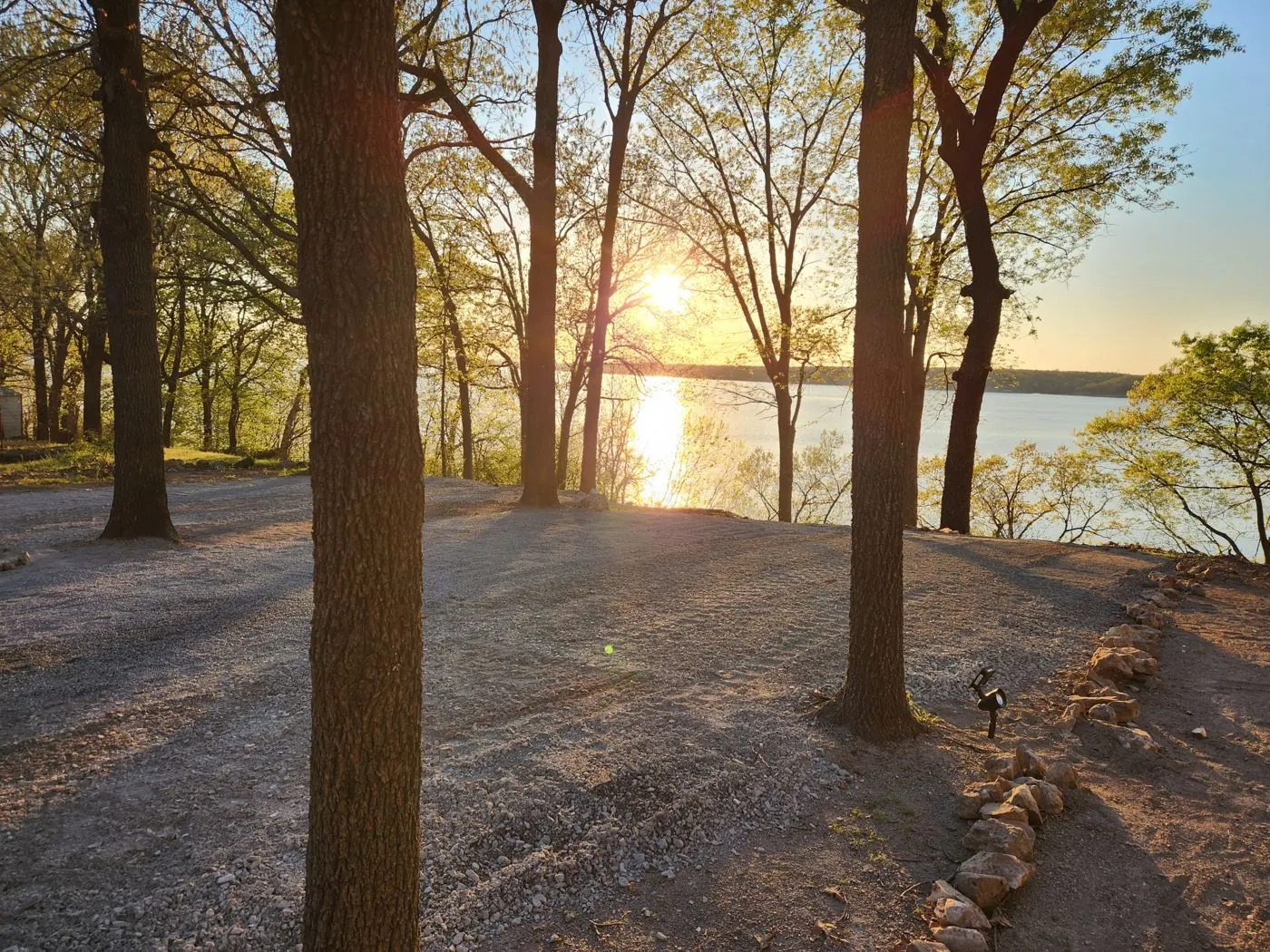
Two public Lake Hudson boat ramps sit about half a mile from the park. Every site has full hookups, so you can come in off the water and rinse off right at your camper. Nightly sites are $47, and the $100 deposit comes after we approve your stay. Your RV should be 10 years old or newer, and older rigs get reviewed from photos.
Spring in Mayes County also brings storms, and the run lands right in them. We have a storm shelter on site and laundry too, so you are not guessing where to go when the sirens start or hauling a bag of muddy clothes across town. Most of our guests stay by the month, so nights are calm, and that helps when you leave at 5 a.m. We have 4.7 stars from 57 Google reviews, and Austin S. wrote:
This park is beautiful! You can be by the lake or tucked back in the trees.
 Austin S.Google review
A longer stay adds up differently from a single night, and our post on what a monthly RV site costs near Pryor works through the numbers. Our page on fishing Lake Hudson from the park covers the water and the ramps, and our nightly RV sites page shows what a short stay costs.
Tell us your dates and whether you are towing a boat, and we will tell you which sites are open.
A spring paddlefish trip, step by step
The steps below run in order from the phone call to the drive home.
- In February, call us with your dates and tell us whether you are bringing a boat, so we can match you to a site.
- Buy your Oklahoma fishing license and get the free paddlefish permit, and save the permit to your phone.
- Open the department’s paddlefish regulations page and read the limits, the tagging rule and the night closure again.
- Watch the rain and the water temperature.
- Call the wildlife department and ask where snagging is open on the Hudson tailwater this year.
- Pack a heavy rod and a barbless hook, plus weights and pliers. Add a tag, a cooler and rain gear.
- Fish between 6 a.m. and 10 p.m. only, and give other anglers room for their casts.
- If you keep a fish, tag it at once and stop snagging for the day. Report it online within 24 hours.
- Clean the fish before you leave the state, and leave the eggs behind unless the rules allow you to keep them.
How do spring storms change a paddlefish trip?
Spring fronts in Mayes County can come up fast. Pull off the water at the first sign of lightning. Water released from the dam can also raise the river while the sky overhead is clear, so take the dam’s sirens seriously.
Know where the storm shelter is before you need it. If a watch goes up while you are fishing, come back early, since a boat on a trailer is hard to tow in a downpour. Our post on RV storm season in Mayes County covers the plan in more detail.
Mistakes people make on their first paddlefish trip
The first is buying the fishing license and forgetting the permit. The permit is a separate paper, and the state requires it for everyone regardless of age.
The second is snagging after dark, since the 10 p.m. closure applies at Lake Hudson. The third is standing too close to another angler. The department’s guide says not to swing within 20 feet of the bank, because tackle can fly toward people on shore.
The fourth is planning one day and calling it a trip. A weekend of cold fronts can shut the run down. A week gives you more mornings to choose from.
The last is trusting a single page. We found two department pages that disagree about the research center, and a third that treats the Hudson tailwater differently from the angler guide. When pages disagree, call the wildlife department and write down who you spoke with. For nearby things to do between fishing days, see our post on things to do in Salina, and for the wider picture of the lake, our guide to fishing Lake Hudson covers the bass and crappie fishing.
Sources
- Oklahoma Department of Wildlife Conservation, Paddlefish Regulations, checked November 10, 2026
- Oklahoma Department of Wildlife Conservation, License Fees, checked November 10, 2026
- Oklahoma Department of Wildlife Conservation, Ponds, State Parks, Rivers and Tailwaters (tailwater rules), checked November 10, 2026
- Oklahoma Department of Wildlife Conservation, Paddlefish Angler Guide: Top Tips and Area Highlights (July 25, 2023), checked November 10, 2026
- Oklahoma Department of Wildlife Conservation, Lake Hudson, checked November 10, 2026
- Oklahoma Department of Wildlife Conservation, Paddlefish, checked November 10, 2026
- KTUL, GRDA to prohibit access on low water dam rocks (September 7, 2023), checked November 10, 2026